
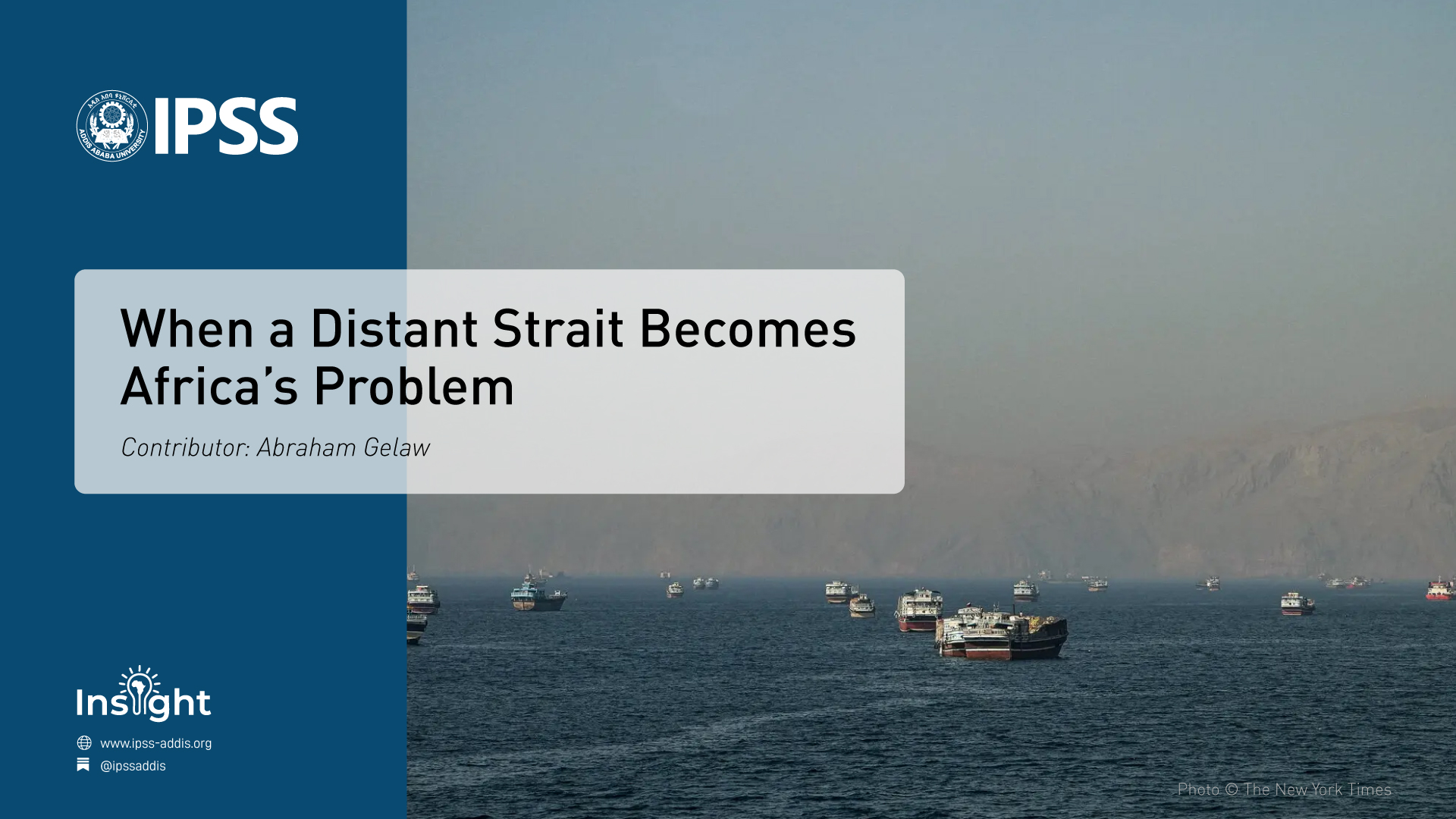
The Strait of Hormuz is often treated as a distant geopolitical flashpoint, far removed from everyday realities in African capitals. Yet, disruptions there expose some of the deepest vulnerabilities in African economies. When tensions rise in that narrow waterway, the consequences quickly spill across continents: fuel prices rise, shipping stops or slows, insurance costs climb, and the economic burden lands far from the conflict area. For African countries, especially on those heavily dependent on imported fuel and external trade routes, a crises in Hormuz is never just a Middle Eastern problem.
That vulnerability is visible in the case of Gibe, an Ethiopian cargo ship caught in the wider uncertainty affecting maritime traffic in the Gulf. While no official Ethiopian statement has confirmed that the ship is stranded, maritime reports show that hundreds of vessels have faced delays and movement restrictions in the region amid the tension. In that sense, Gibe becomes more than a ship, it becomes a symbol of how quickly African economies can be shaken by crisis that begin far beyond their borders.
The problem is especially severe for countries like Ethiopia. Because Ethiopia is landlocked, nearly every essential import: fuel, machinery, fertilizer, food, and the likes depends on long and fragile maritime supply chains controlled by external actors. A disruption in one strategic sea route can stall the movement of goods across thousands of kilometers, eventually rising prices in local markets and straining already vulnerable households. What begins as a geopolitical confrontation in the Gulf turned into higher transport costs, supply shortages, and daily hardship for ordinary people far beyond the area of conflict.
It is easy to discuss this kind of disruption in the language of trade volumes, logistics, and insurance packages. But, behind every delayed shipment are factories waiting for raw materials, traders unable to meet demands, and households absorbing higher prices. Ships like Gibe are not carrying cargo alone, they carry business timelines, investment plans, and livelihoods. The uncertainty surrounding them exposes the human side of the economic dependency: decisions made in distant capitals can determine whether local businesses stay open and whether basic goods remain affordable.
Beyond the economic shock lies another layer of vulnerability, Africa’s diplomatic exposure. For decades, many African states tried to preserve a degree of non-alignment in global conflicts, not out of indifference but out of strategic necessity. Neutrality created room to engage with competing powers while avoiding unnecessary entanglements. Today, however, that diplomatic balance is seen eroding. In the conflict between Iran and its rivals, some African governments have openly aligned themselves with one side or another, often tied to aid, security cooperation, or strategic partnerships.
That shift carries risk. When countries take sides in conflicts far from home, they also expose themselves to the political consequences of those alignments. Access to markets, shipping routes, and diplomatic goodwill can quickly become conditional. Strategic trade corridors that once seemed neutral may be reshaped by the politics of alliance. For economies, already vulnerable to external shocks, this narrowing of diplomatic flexibility can deepen the impact of global crisis rather than soften it.
This is where the irony becomes hard to ignore. At the very moment African economies are most exposed to disruptions in global trade, some governments are making diplomatic choices that may increase that exposure. Alignment may bring short-term gains, but it can reduce room for maneuver when tensions escalate. If access to strategic routes becomes tied to geopolitical loyalty, then neutrality is no longer simply a moral position, it becomes an economic asset.
The disruptions at the Strait of Hormuz should serve as a wake-up call. Africa can no longer afford to treat global supply crisis as a temporary inconvenience. The disruptions are becoming more frequent, more political, and more costly. The current crisis may pass, and ships like Gibe will eventually move again, but the structural vulnerability will remain unless African states take deliberate steps to reduce their exposure.
What to do?
One part of the solution lies in strengthening regional energy capacity. The Dangote Refinery was built primarily to reduce Nigeria’s fuel import dependence, but its scale has created the possibility of easing refined fuel shortages across West Africa. In moments like this, that ambition feels urgent. If distant disruptions can choke energy supplies so quickly, then domestic refining capacity is no longer just a commercial opportunity, it is strategic protection as guaranteed by its direct supply of jet fuel to Ethiopian Airlines. One refinery alone cannot shield the continent, but a coordinated network of investment in African refining infrastructure could cushion the blow when global routes are disrupted.
The same principle applies to regional trade. The promise of the African Continental Free Trade Area was to make African economies reduce overreliance on external markets by deepening internal exchange. Yet, each global crisis reveals how unfinished that project remains, since deep, continent-wide internal trade integration is still limited due to political and non-political barriers. When a shipment is delayed in Hormuz, the question is not only when it will arrive, but whether viable alternatives exist within the continent. Supply chains needs to shift regionally and goods must be sourced closer to home. Until those alternatives become practical realities, African markets will remain exposed to shocks beyond their control.
Perhaps most importantly, preserving space for political neutrality or at least strategic flexibility remains a valuable asset. In a world of shifting alliances, the ability to engage multiple partners without being locked into one camp can be a quiet strength. Additionally, relying on a few routes, whether maritime or land, creates risks. Exploring alternative corridors, even if they are expensive in the short term, can build long-term resilience.
This is the deeper lesson of the current crisis: Africa’s vulnerability is not only about geography, but about dependence. Too much still depends on external shipping lanes, foreign refining systems, and geopolitical arrangements shaped elsewhere. That dependence leaves African economies vulnerable to disruptions they did not create and cannot control.
The stranded Gibe, whether symbolic or literal, reminds us that Africa’s place in the global economy comes with both visible and hidden costs. But it also offers clarity. It reveals where resilience is weakest and where policy choices matter most. If Africa wants to reduce the impact of future crisis, it must invest in the system that expands its agency: regional trade, domestic refining, diversifying trade routes, and diplomatic flexibility. But, energy security also requires looking beyond oil alone. Expanding investment in renewable energy sources such as solar, wind, and hydropower, while strengthening regional power pools and cross-border electricity connections, could help African countries rely less on fragile global supply chains and cushion the shock when geopolitical tensions disrupt fuel markets. In a continent rich in energy potential yet deeply vulnerable to external disruptions, interconnected and diversified energy systems are no longer just development goals; they are becoming a necessity for economic resilience.
Disclaimer: The views expressed in this Insight reflect the perspectives of the contributor and do not necessarily represent the official position of Institute for Peace and Security Studies.
 |
Contributed by Abraham Gelaw Researcher |