
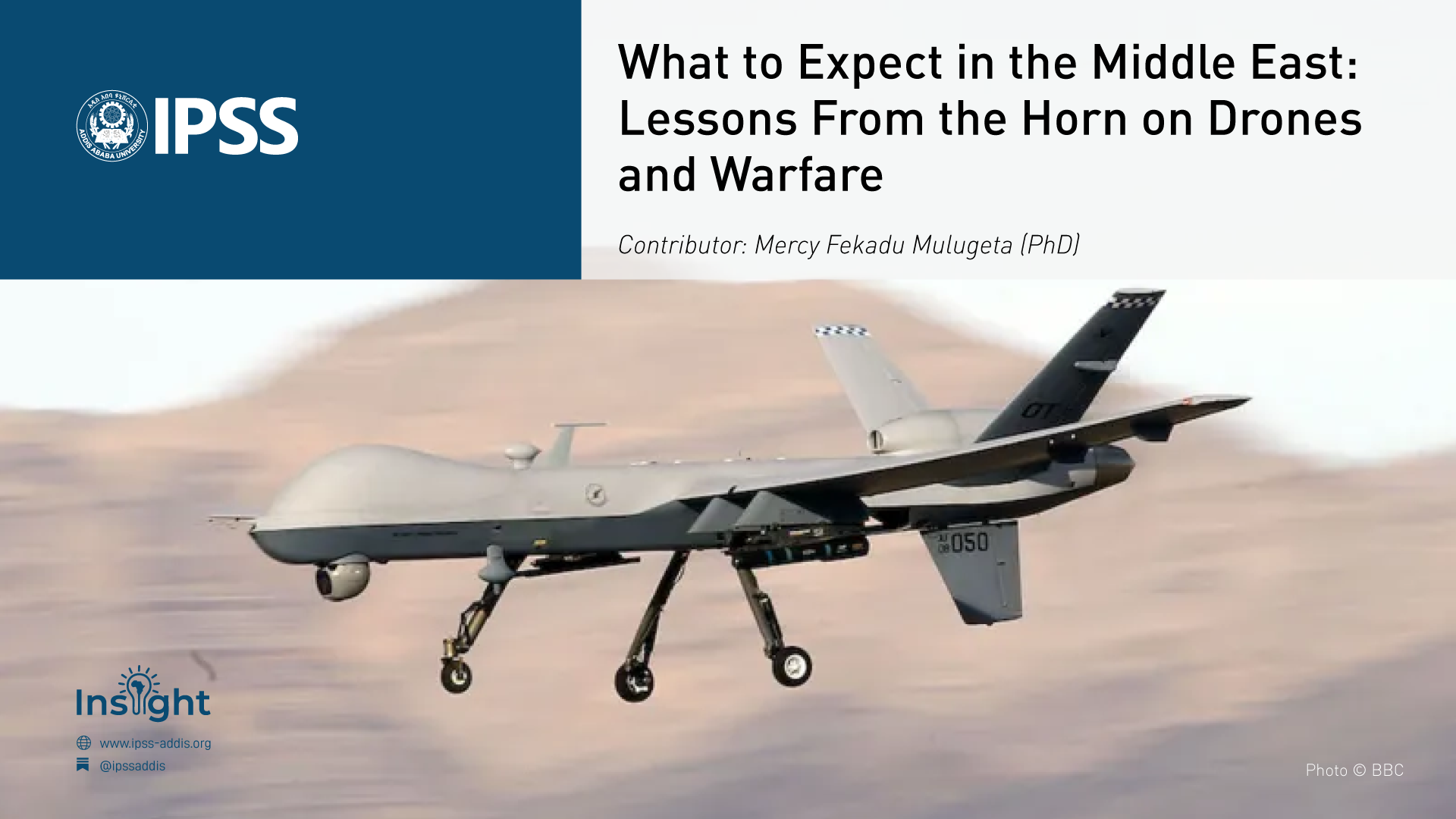
While globally, drone use is neither new nor rare, in Africa, drone use in conflicts like Sudan and Ethiopia, has stricken curiosity. The deployment of drones by US forces against Al-Shabab in 2007, establishment of a base in Arba Minch and an attempt to launch a drone programme in the 2010s are few occasions where drones appeared in Ethiopian military vocabulary.
Evidently, contemporary use and discourse reflect global and geopolitical development in the region. The world is in ‘the second drone age’, inevitably heading towards the ‘third’. Shift in technology, particularly one associated with violence shapes not only the outcome of war, but how societies relate to each other, how they relate with the states, how states relate to each other as well as individuals’ action. So with current progress in the technologies of violence, warfare is not the same, and neither is human relations. As I take caution not to make overly drone centred, techno-deterministic conclusions about human behaviour; while human essence might not be shaped by technology, its outward actions and expressions certainly depend on machineries around it, whether in the stone age or today.
Even in making this disclaimer, I still see a big danger in overly relying on a technology centred analysis, which I believe was the case in the recent civil war that ended in Ethiopia. One analyst reported: “only one side had access to military drones and used them decisively to stop an armed convoy …” and the analyst further concluded “As such, it can be argued in a certain context, drones have helped decide the outcome of the conflict, even the fate of nations.” Interestingly such analysis of the war in Ethiopia led the world to question its previously ‘sceptical’ tone against drones. In my chapter on ‘drone discourse’ I’ve written in detail, how
The argument that drones were used to ‘tip the balance’ of warfare in Ethiopia has been used not only to understand Ethiopian politics but also to inform discussions on the role of drones and implications in IR theories. A discourse on the ‘exceptionalism’ of drone use in Ethiopia emerged out of a theoretical discussion that had come full circle – from initial excitement of the ‘revolution’ of warfare’ to the unexcited view that it ‘is not fundamentally different from any other process of targeting that takes place in conventional war, save that it seeks to pinpoint the targets’.
While analysts’ observation on one-sided drone use and its role is not factually all untrue, there are many points left out of this discussion; and these are insight that would help us understand emerging trends in drone warfare around the world particularly the Middle East. The first the most important, is the lack of actual evidence in the reports, of course drone use was there, but to what extent and to what effect different types of drones were used, e.g. surveillance Vs. attack – and how the two complemented each other. Second is exactly how air strikes translate to on the ground victories that require either change in government, territorial occupation or access to resources. This co-relation between different means of warfare and on-the-ground gains is extremely important in shaping war outcomes. Third, is the selective analysis of reporting what drones have done. From an analysis of data by ACLED for periods 1 November 2020 to 30 December 2022 displaying different types of armed events including air/ drone strike, once can easily deduct periods where the on-state armed group progressed towards the capital while drones were in use. What does this tell us about the conditions under which drone use becomes unsuccessful?
These three insights require a closer examination in other conflicts currently ‘seemingly’ relying on air strikes only. The factors that facilitate on-the-ground success could be a multitude of factors, “local and international factors – ranging from topographies, the internal organisation of armed groups and the multipolar world enabling alternative markets for technologies.” Finally, the deployment of drones, vis a vis, the deployment of the discourse on drones can shape behaviour, so much can be said on this drawing from recent conflicts in Africa and other parts of the world. Particularly, the conflict in the Middle East currently offers a sad puzzle. These factors are shaping the outcome of the US-Israel attack in Iran, and it invites a curious investigation and discussion on drones and warfare but also evolving actions as both sides try to ensure some form of on-the ground progress in one way or another.
This Insight is developed based on my book chapter titled ‘Drone Discourse: Contemporary Technologies of Warfare in Ethiopia’, follow the link below to read the full chapter: https://www.taylorfrancis.com/chapters/edit/10.4324/9781003584971-8/drone-discourse-mercy-fekadu-mulugeta
Disclaimer: The views expressed in this Insight reflect the perspectives of the contributor and do not necessarily represent the official position of Institute for Peace and Security Studies.
 |
Contributed by Mercy Fekadu (PhD) Director, Institute for Peace and Security Studies |