
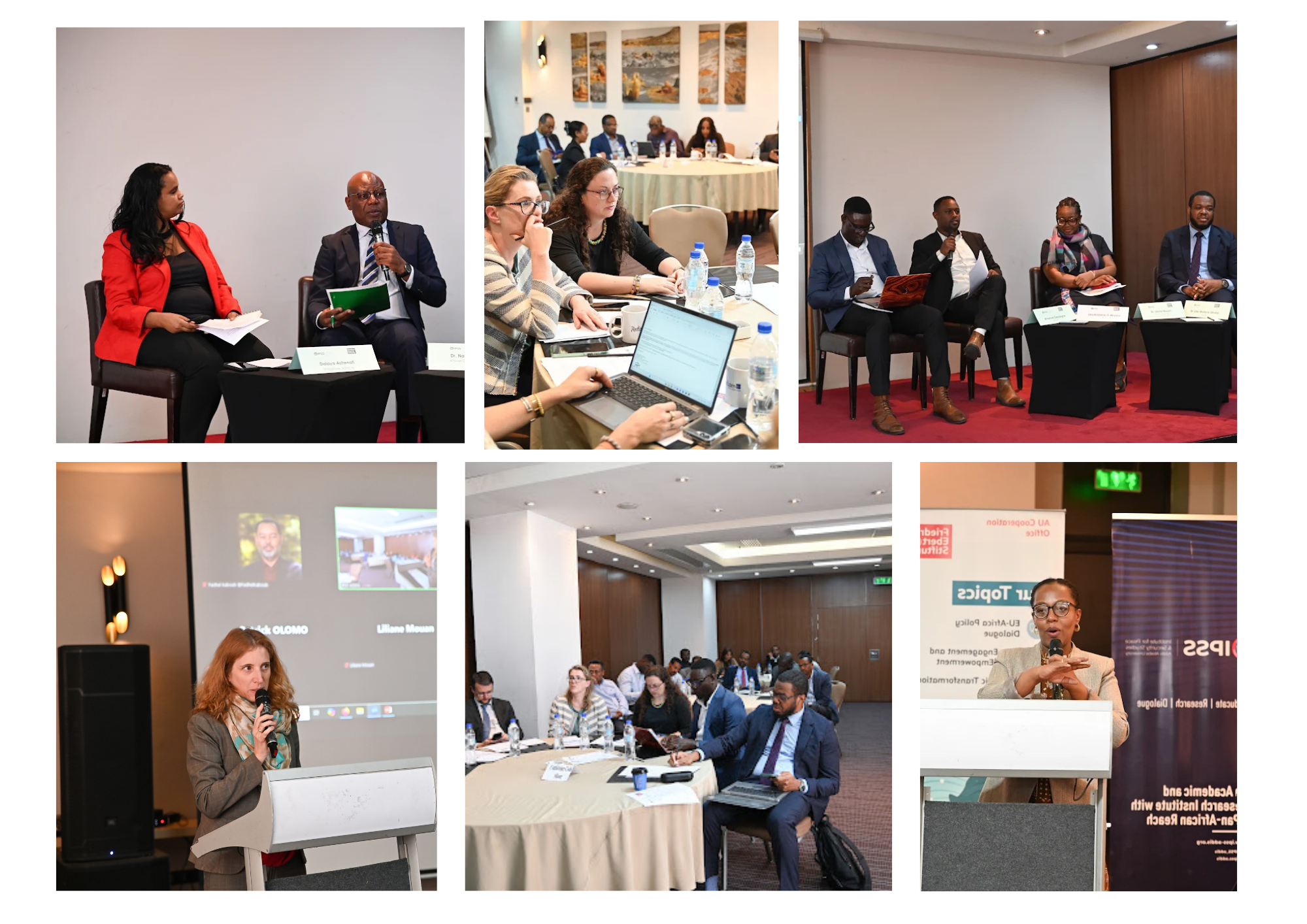
Addis Ababa, Ethiopia. On February 3, 2026, the Institute for Peace and Security Studies (IPSS) and the Friedrich-Ebert-Stiftung (FES) held a high-level hybrid workshop entitled “Debt, Partnership, Sustainability, Conflict and Sovereignty: Reframing Africa’s Financial Future” which was very successful in bringing together policymakers, academics, and practitioners to discuss Africa’s ongoing debt crisis and how it is interrelated with peace, security, and governance from both a structural and interdisciplinary perspective.
In the discussions, consensus was reached that Africa’s debt challenges are attributed not to short-term mismanagement of finances but rather to long-standing structural issues and unequal distribution of power in the global financial system. Key contributors to these debt-related problems were identified as continued food and energy scarcity, limited ability to engage in value-added manufacturing and external evaluation processes for creditworthiness that severely limit policy choices available to African nations.
The discussions underscored that while there may not be a direct relationship between debt and conflict, the pressure created by debt can contribute to instability in areas where institutions are weak and social investment is minimal. More importantly, members of the panel concluded that debt distress is both an economic and human rights issue; furthermore, austerity measures put in place to address debt distress disproportionately impact vulnerable groups as they cut into essential services such as health care and education.
In her closing statement at the workshop, Mercy Fekadu (PhD), Director of IPSS, emphasized the need to go beyond sympathy for the structural issues facing Africa.
The main outcome of the workshop was the creation of a new, sovereignty-based path to development for the continent. Among the key policy recommendations were:
- Increasing productive/value-added investments in industrialisation, improving food systems through agricultural and related activities, and encouraging the production of renewable energy.
- Fostering greater Pan-African cooperation, such as working together on AU Common African Position on Debt 2025, to strengthen collective bargaining and the ability to negotiate as one body.
- Creating jobs and developing talent that will appeal to young Africans.
- Aligning debt management with other reform policies to adhere to the principles of human rights to protect public spending.
In sum, the workshop demonstrated that to change the future of finance in Africa, there must be a united front of all Africans (governments and civil society) to strengthen their institutions and implement long-term structural reform so that they will have a fair and sustainable financial system.