
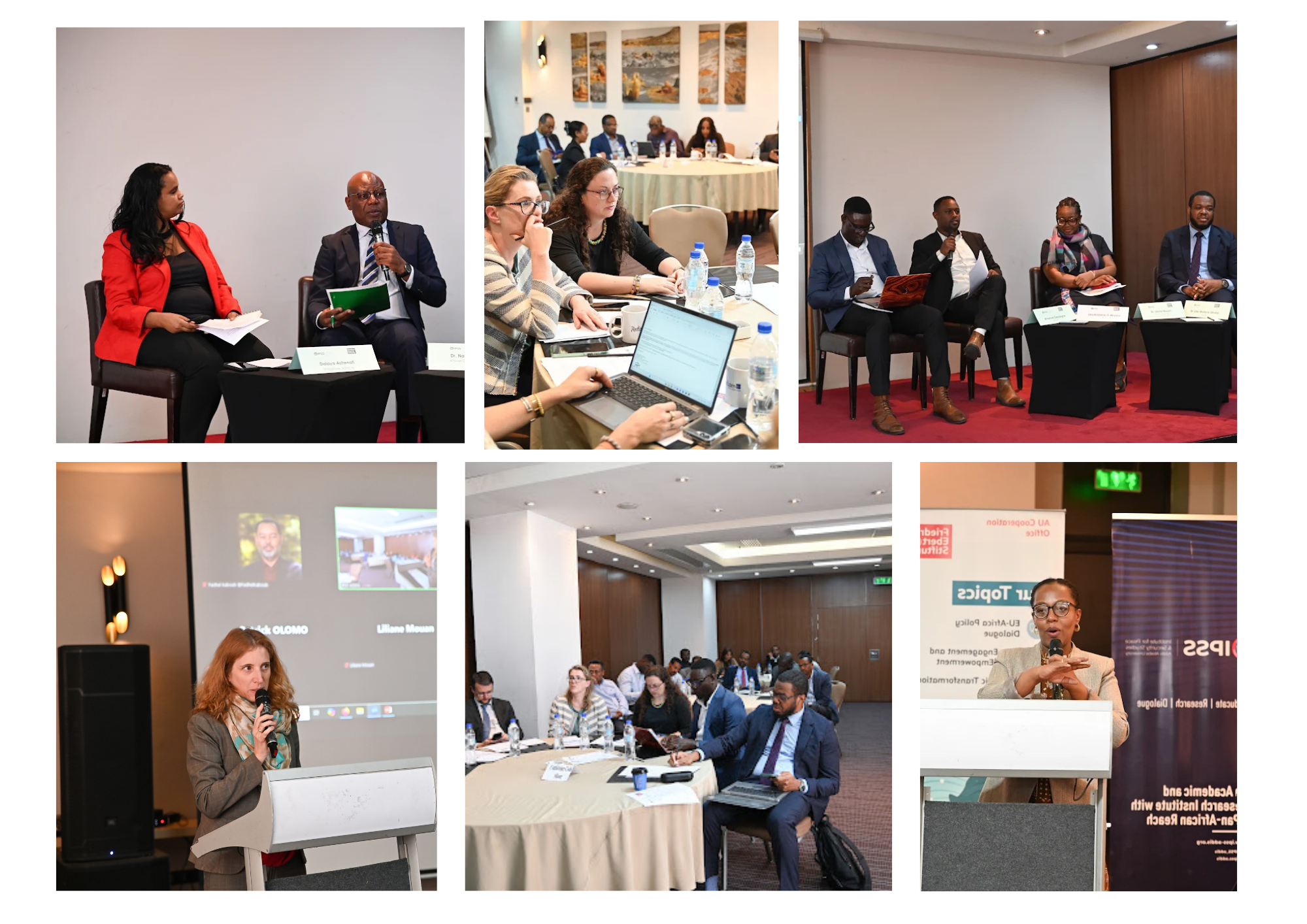
Addis Ababa, Ethiopia – The Institute for Peace and Security Studies (IPSS) and the Friedrich-Ebert-Stiftung (FES) successfully convened a high-level hybrid workshop on 3 February 2026, titled “Debt, Partnership, Sustainability, Conflict and Sovereignty: Reframing Africa’s Financial Future.” The event brought together policymakers, scholars, and practitioners to deliberate on Africa’s deepening debt crisis, examining its structural and interdisciplinary links to peace, security, and governance.
A central consensus emerged that Africa’s debt distress is rooted not in short-term fiscal mismanagement, but in long-standing structural vulnerabilities and power asymmetries within the global financial architecture. Key drivers identified include persistent food and energy deficits, limited capacity for value-added manufacturing, and external credit assessment systems that constrain policy space.
The discussions underscored that the relationship between debt and conflict is indirect, but significant: debt stress amplifies fragility when combined with weak institutions and reduced social investment. Conversely, the panel emphasized that debt distress is as much a human rights crisis as it is an economic one, with austerity measures disproportionately affecting vulnerable populations through cuts to essential services like health and education.
In a powerful concluding reflection, the Director of IPSS, Mercy Fekadu (PhD), reiterated the urgency of moving beyond empathy-centered approaches toward interventions that address structural challenges more directly.
The workshop’s primary outcome was the call for a new, sovereignty-centered development trajectory for the continent. Key policy considerations include:
- Advancing productive and value-adding investment in industrialization, food systems, and renewable energy.
- Strengthening Pan-African coordination, such as the AU’s Common African Position on Debt (2025) to build collective bargaining power.
- Developing youth-centered employment and talent development policies.
- Centering debt management and fiscal reforms in human rights principles to protect public spending.
Overall, the workshop affirmed that reframing Africa’s financial future requires coordinated African agency, institutional strengthening, and long-term, structural reforms to build a more equitable and sustainable financial system.