
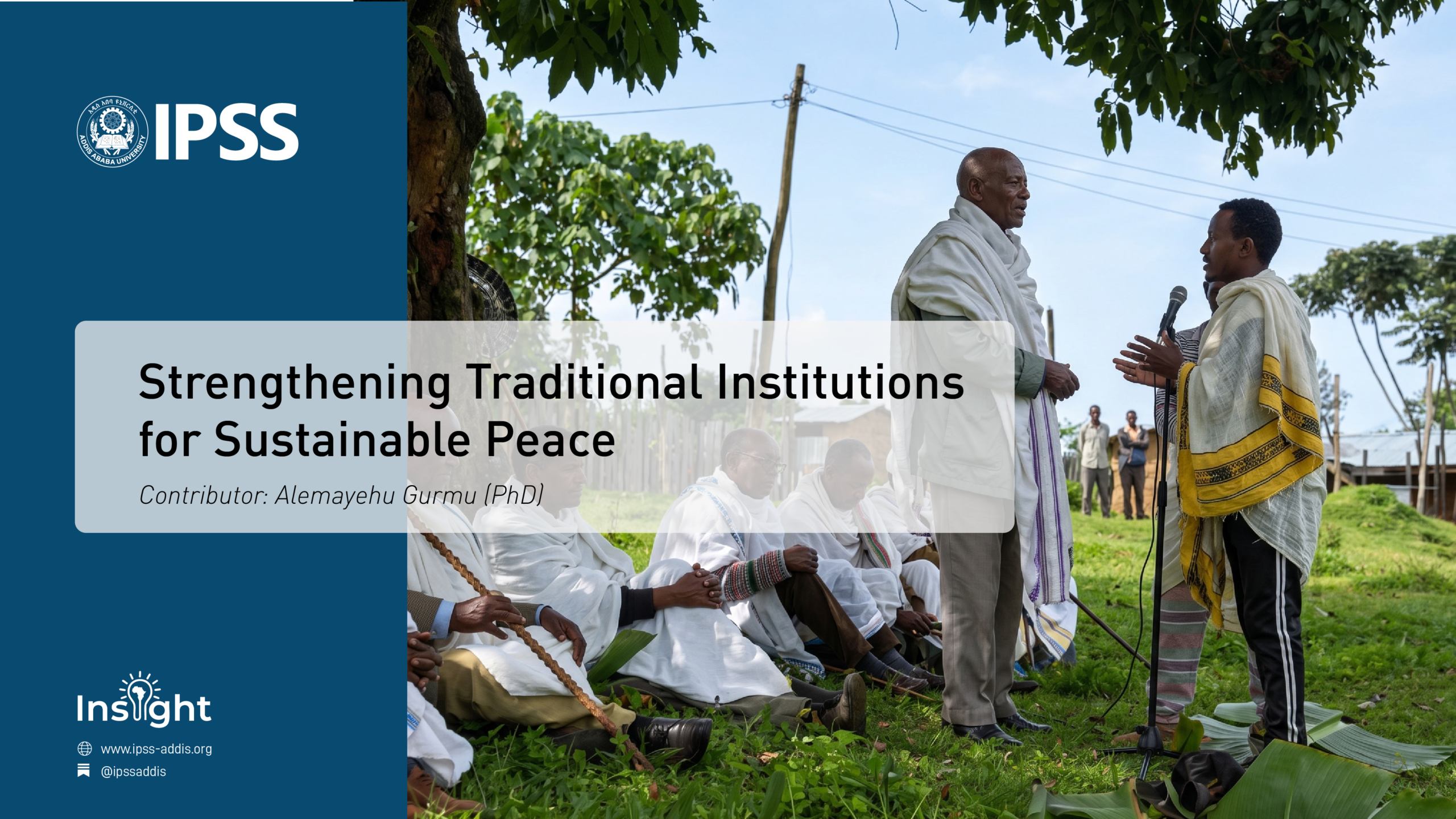
Traditional institutions have long served as the backbone of social, economic, political and cultural lives of human beings. These institutions continue to influence contemporary governance, conflict resolution, identity formation, and community cohesion. Their experience provides a compelling illustration of how indigenous systems of governance can endure and evolve side by side with the modern political structure and judiciary system. As the legal or formal structure cannot reach the public at the grass-root level at large, the role of traditional institutions is immense. Their role for the prevalence of peace is also undeniable.
At their core, these traditional institutions are endowed with indigenous system of knowledge and authority. As modern government structures are a recent phenomenon compared to the long existence of society, they were the ones close to the communities to handle recurring disputes and conflicts. Their roles are in close relations with elders’ mediation, clan structures, age-grade systems and customary courts. These are not guided by codified law but from cultural continuity, collective memory, and spiritual matters. These deep-rooted situations give them the unique authority and legitimacy in societal governance.
One of the most significant roles of these traditional institutions is their acceptance by the public in conflict resolution. This differentiates them from the legal procedure, where the cases end in adversarial, expansive, and slow procedures. Conversely, traditional institutions involve both adversaries as solutions to the problem where it is considered as necessary for dispute handling mechanisms. In addition to that, the procedures followed by these institutions help to give lasting solutions to the disputes that occurred. Moreover, traditional institutions tend to emphasize reconciliation, restoration and social harmony- as opposed to punitive measures. Elders mediate disputes with the aim of restoring relationships rather than determining guilt or innocence. This restorative approach is very vital in the rural areas, where the majority of the population lives and the formal structure may be inaccessible.
Traditional institutions settle disputes ranging from familial to community or wider level conflicts. The parties who wanted to settle the matter by the involvement of traditional institutions give their words of confirmation that they will be abided by the decisions of the elder’s jury ahead of the jury process commencement. As they have ostracizing mechanisms to deter those who refuse to accept the decisions of elders, their decisions are largely accepted by the disputants. That mechanism could reach up to isolating the whole family from the community in which they live. So, the disputants dominantly accept decisions passed by the jury of elders and go along with community members without much opposition. This helps for peace to prevail in the family, the area or the community at large. These institutions are the ones that hold society together for long to survive as a stable and harmonious society.
Traditional institutions resolve disputes based on the culture that exists in the area. If it involves two or more linguistic and cultural groups, the mediation could be based on the common heritages the communities have in common. In a homogenous cultural situation, the traditional conflict resolution embodies values, norms and practices that are prevalent in that specific community. The rituals, oral traditions and folklore that transcends through generations help to devise a solution based on these facts. This practice helps to reinforce social cohesion and assure intergenerational continuity.
As traditional institutions are endowed with various mechanisms to resolve disputes, there are criticisms forwarded against them by other groups. Among the criticisms forwarded are its gender sensitivity as it gives very little room for women’ participation given the modern era where development is equated with gender equality as one of the indicators. In some societies the mediation is done by elders disregarding the continuity and participation of the next generation. Hence, these institutions have to be improvised based on the demands of society as involving women and the youth make it continuous and inclusive in its practice for future endeavours. There are various examples entailed evidences in Ethiopia. However, still there are challenges as changing the long existing norm is not accepted by some elders of the communities.
Traditional institutions have other challenges as well. Modernization brings much of the population to cities as the trend in many countries is observed. Cities accommodate people who flock to the area having diverse backgrounds and cultures. Hence, it is very difficult to preserve the culture of a specific community in this situation. In addition to that, the youth, who are supposed to be the next generation to continue the practice of these institutions, are absorbed to different modern education and influence of globalization, which do not support or look into indigenous knowledge with keen interest. For some, preserving these institutions is considered as naive, uncivilized and tribal. For others, as the wider African community live in the rural areas preserving and consolidating the cultural artefacts with modern innovations are important to sustain communities for better harmonious living. Hence, its practice in the future may decrease due to such circumstances. Hybrid models which incorporate both traditional and modern dispute resolution mechanisms are important in this regard (Gachacha in Rwanda and Shimgilina in Ethiopia are cases in point).
The future trend shows a path that incorporates both traditional as well as modern institutions. This will help to harmonize relations between the two instead of considering one against the other. This presupposes open discussion among scholars and the community. Traditional institutions in addition to changing through time, they must be inclusive, transparent and give due respect to human rights in order to continue their acceptance in the modern era. These institutions are not static as they change through time and space. While they face challenges in the modern era, they are important institutions in maintaining societal cohesion together with preserving cultural identities of people. The specific identities change through time and space with intermingling of people drawn from various corners to a specific place where people of various cultures consider the cities as melting pots. However, their roles in preserving peace and tranquillity in society are undeniable. Nevertheless, the future holds challenges as well as continuity in a modern era where the institutions are made to fit the demands of the next generations at large.
Disclaimer: The views expressed in this Insight reflect the perspectives of the contributor and do not necessarily represent the official position of Institute for Peace and Security Studies.
 |
Contributed by Alemayehu Gurmu (PhD) Lead Researcher |