
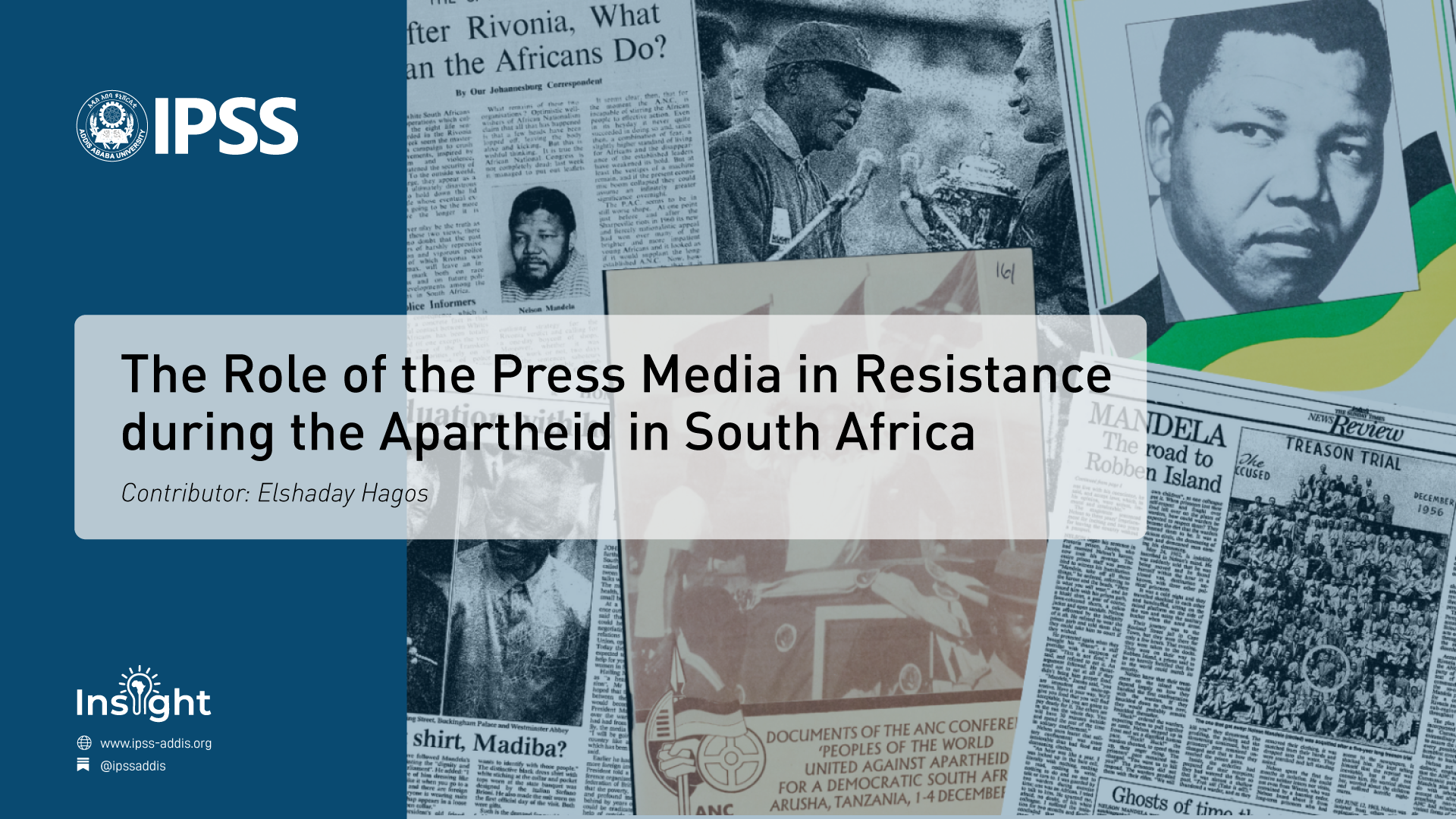
When we think about resistance under apartheid, we tend to picture mass protests, underground movements, and armed struggle. This understanding misses something of equal importance, the settle and at times silent indirect resistance. During the South Africa Apartheid regime, the print media emerged as a subtle yet powerful space for resistance. Despite the governmental restrictions, the English press media, more specifically the Weekly Mail, challenged the regime, exposed the government’s repression and amplified the voices of the suppressed mass. It was not just reporting on resistance; it was resistance.
The Weekly Mail, an English newspaper established in 1985 was an alternate newspaper that was founded after the closure of the two most liberal newspapers, the Rand Daily Mail and the Sunday Express. It was considered the first newspaper to adopt a “color-blind” approach to news selection, at a time when most South African publications in the 1980s were explicitly targeted at racially defined audiences, either Black readerships, like Sowetan, or white audiences, such as Business Day. This newspaper openly criticized the regime and exhibited the watch dog role of media by putting the spotlight on the government and pointing a finger towards any unjustly actions and decisions taken. Due to this, heavy censorship was put into place to control/limit what was shared with the public. Regardless, the Weekly Mail found ways to proceed with the indirect resistance by exhausting any loophole that were available.
This methodical approach to subverting censorship relied on specific, calculated techniques. According to Bryan Trabold, two main tactics applied by the Weekly Mail were wide-eyed innocence and using the law against the government. In the first case, journalists, and editors, under a false pretense, claim not to have a clear understanding of the law. They defend their action by claiming that the law was too vague to fully comprehend. They insist that it was an honest mistake due to the lack of awareness. Through this, they were able to get away with having published “illegal” contents that presents the apartheid government in a bad light.
In the latter case, they used the law itself against the government and stretched it as far as it would go. They became tactful in using the law by search for any loopholes and exhaust them. A great example is the photo publication of Nelson Mandela on the front page of the newspaper. Here, they reused the picture from an official government booklet and then openly acknowledged the ministry by adding “courtesy of the Ministry of Information” at the end. When confronted, they claimed that they had operated under the jurisdiction of the law as the image was obtained from an already existing governmental publication which had already been shared with the public.
Beyond these legally focused methods, the newspaper also developed clever visual techniques to communicate censored information. The Weekly Mail was famously known for their subversive black lines, arguably one of the most powerful visual acts of resistance. Instead of removing censored content entirely, the newspaper would visibly redact it, leaving thick black marks where names or phrases had been cut. This did more than comply with censorship laws; it exposed them. Through this, they were informing the reader that the article talks about an issue that is sensitive to the movement. In some cases, the readers were even able to figure out the censored parts by using contexts. A similar technique had also been applied by some Zimbabwean newspapers during the colonial period. They often left empty space where an article should have appeared, turning absence into a form of protest and signaling to readers that content had been deliberately censored. Therefore, they informed the public what they wanted to without actually putting it into words.
Now, when talking the tactics employed by the Weekly Mail, it is very important to discuss the existing environment. The ability of The Weekly Mail to maneuver through the restrictions was made possible partly by the unique nature of media censorship during the Apartheid regime. When zooming in on censorship during this period, it had a somewhat contradicting nature situated between complete censorship while also providing the space for freedom of expression. In other words, the government wanted to maintain its tight grip on the media outlets while allowing them the space to criticize it. By allowing some form of honest reporting from the newspaper, the government was making its case for being non-repressive. As stated by Bryan Trabold, while the apartheid regime used massive violence to maintain control, it also took elaborate steps to create and maintain the system of apartheid “legally”.
The same could also be said about the print media. Here, paradoxical nature of the print media was evident. On the one hand, it took on the watchdog role by challenging the government and openly criticizing it. On the contrary, it served as a legitimizer of the regime in the eyes of the international community. By reporting news that openly criticized the government, it unintentionally created the image that the South African Apartheid government had a democratic character. Ironically, it was this need to be accepted by the international community that created a space for English media to reveal the injustices that was taking place in South Africa.
What made the Weekly Mail so significant is not just that it resisted apartheid, but how it chose to do so. Its resistance was not loud or confrontational, in the traditional sense, rather often strategic, patient and at time almost quite. They were able to challenge the regime while operating within its constraints. As stated earlier, the main contradiction was that through its reporting, it risked reinforcing the regime’s claim to legality and tolerance. This tension feels especially relevant today, as media outlets in many parts of the world continue to navigate censorship, political pressure, and legal constraints while still trying to hold power accountable. This shows that the role of the press as an actor of resistance did not diminish but simply changed.
Disclaimer: The views expressed in this Insight reflect the perspectives of the contributor and do not necessarily represent the official position of Institute for Peace and Security Studies.
 |
Contributed by Elshaday Hagos Education and Professional Development Officer |